
Learn by Doing. Connect by Creating.
Meet The Instructors

Kenter Davies
“Bread and Roses”:
One Day Choir
What will participants learn in your workshop?
I hope that participants can see that everyone is welcome in a singing space like this and that humans were meant to sing together. Music-making is not meant to be perfect, just as we are not perfect as human beings. It is in our nature to sing and this is a space that affirms all experience levels.
How did you first get into your craft?
I started arranging music and leading people in song in high school and college through my time singing a cappella music. I dove deeper into the art of facilitation three years ago in NYC and discovered how much I love to give people spaces to connect, find freedom in their voice, and play together.
What do you love most about teaching workshops?
What I love most about teaching these workshops is seeing people transform. Whether it is through one session or over the course of time, it is so inspiring to see how people find more openness, confidence, and relaxedness through spaces like this that provide safe avenues to sing bravely.
What can someone expect to walk away with after your class?
I hope that people can leave feeling a little bit lighter, a little bit more hopeful, and a little bit more connected to each other.


Can you share a favorite moment from teaching or creating?
One of my favorite memories was singing "Blackbird" by the Beatles in Prospect Park in Brooklyn. We sang outside in the woods and while we were singing, a blackbird was flying above our heads in the sky. It was beyond magical.
How would you describe your teaching style?
I would describe my teaching style as playful and heartled. I strive to strike a balance of whimsy and depth through this music-making. Everything is invitational, mistakes are celebrated, and vulnerability is always welcome. I think it comes from the heart of who I am.
What’s a small tip or insight you wish every beginner knew?
The quality of the music is people's experience of making the music. We're to be in the process, not focused on any sort of product.
What do you love about working in the Hudson Valley / Roe Jan region?
I have experienced so much warmth, curiosity, and care from the people I have sung with in the Hudson Valley / Roe Jan region. Our choir as part of workshop weekend last year was so beautiful and fulfilling. I cannot wait to return this year to sing again.
Bio
Kenter (he/him) is a choral director and vocal arranger, based in Brooklyn, NY. He facilitates connective, playful, heart-led community music events in New York City and beyond. He recently founded the Mycelium Choral Project, a NYC-based singing community transmuting collective song into collective action.

Hanoux, Hannah Ross
Natural Dyeing 101
What will participants learn in your workshop?
Participants will dive into the foundational magic of botanical color. We’ll cover how to prepare natural fibers for dyeing (mordanting) and the art of bundle dyeing, which involves placing whole plants and extracts directly onto fabric. You’ll learn how to "map" a composition using seasonal flowers and foraged materials to create a permanent, wearable—or in this case, usable—piece of art.
How did you first get into your craft?
I used to work with textiles in NYC, surrounded by the fumes and chemicals of conventional garment production. I knew there had to be a way to create beauty without compromise, which eventually led me to a deep study of natural pigments in Oaxaca, Mexico. Learning to harvest color from the earth changed everything for me. I eventually brought those traditions home to the Hudson Valley, where I now farm and forage for my own dyes. My work today is a bridge between that early color curiosity and a professional commitment to regenerative, non-toxic textile arts.
What do you love most about teaching workshops?
The "unveiling" is always my favorite part. There is a specific kind of collective intake of breath when someone unrolls their bundle for the first time and sees the transformation. I love witnessing that moment of discovery when a student realizes they can create a timeless work of art using the plants around them using minerals, botanicals, time, heat and water. True alchemy.
What can someone expect to walk away with after your class?
Beyond the physical linen table runner you’ll create, you’ll walk away with a shifted perspective on the natural world. You’ll leave with the technical confidence to continue dyeing at home, a better understanding of sustainable fiber cycles, and a one-of-a-kind heirloom piece that carries the memory of the weekend.
%20(2)_JPG.jpg)
%20(1)_JPG.jpg)
Can you share a favorite moment from teaching or creating?
Some of my favorite moments happen during the foraging process. There’s something meditative about slow-walking through a field or garden to see what’s in bloom and ready to give color. Teaching that "artist's eye" to others—helping them see a common marigold or a fallen leaf as a potential pigment.
How would you describe your teaching style?
I strive for a balance of technical guidance and intuitive exploration. While the chemistry of natural dyeing is important, I encourage students to trust their hands and let the materials speak. My goal is to create a space that feels like an open studio, inviting, experimental, and deeply connected to the materials we’re working with.
What’s a small tip or insight you wish every beginner knew?
Nature is a generous teacher, but it isn't always predictable... and that’s the beauty of it. I wish every beginner knew that "imperfections" or unexpected color shifts are often the most interesting parts of a piece. If you can let go of the need for a "perfect" result, you’ll find so much more joy in the process.
What do you love about working in the Hudson Valley / Roe Jan region?
The community of makers and farmers here is extraordinary. Being part of the local textile and agricultural network allows for a true circularity in my work. There is a deep respect for the land in this region that makes it the perfect backdrop for exploring sustainable art... and the seasonal light and colors of the valley are a constant source of inspiration.
Bio
Hannah Ross is an artist, educator, farmer, and mother living in Taghkanic, New York. She creates bespoke naturally dyed textiles in her barn studio on her small farm, located on the traditional homelands of the Mohican, Mohawk, and Ramapough Munsee Lenape people.
Hannah studied Fashion Design at Pratt Institute before working for a decade as a costume artisan in the New York City film industry. As her values shifted toward slower, more land-connected ways of living and making, she stepped away from the fashion system and traveled to Oaxaca, Mexico, where she completed an artist residency and began studying natural dye traditions with Indigenous artisans.
Since moving to the Hudson Valley in 2020, Hannah has rooted her practice in place—growing dye plants, working with regional fibers, creating wearable art and exploring the seasonal rhythms of plant color. Through workshops and community gatherings she shares the process of transforming local plants into vibrant natural dyes, inviting others into a deeper relationship with land, craft, and the quiet magic of making by hand.
_JPG.jpg)
Aaron Zimmerman
Word Magic: A Generative Creative Writing Workshop
What will participants learn in your workshop?
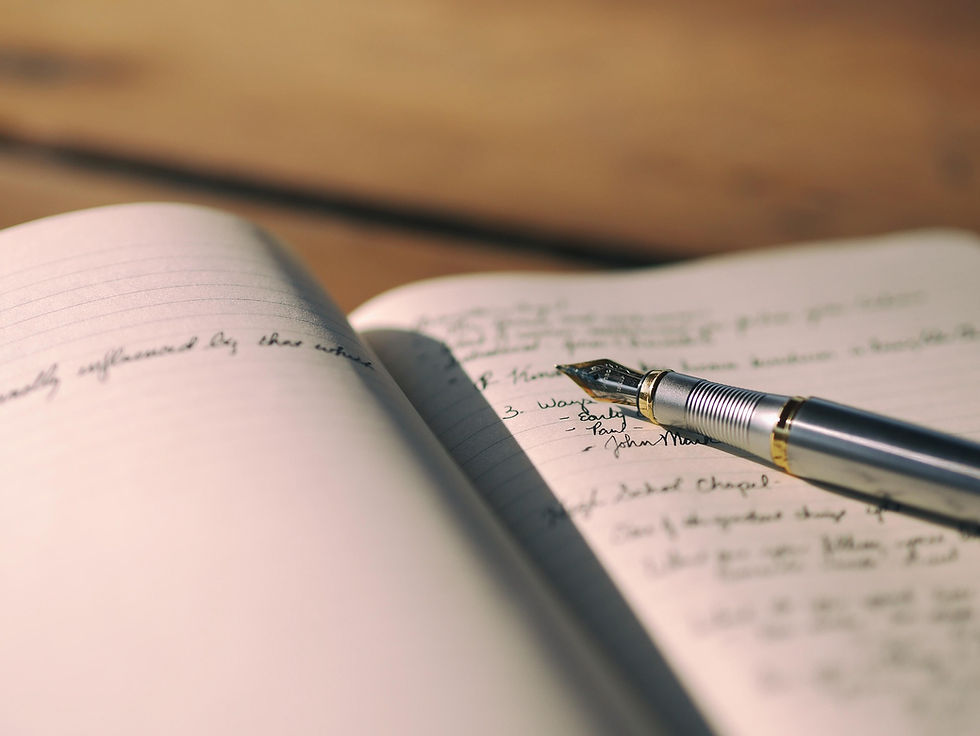
Participants will experience the power of writing in community with others, and the freedom of writing for the sheer pleasure of it.
How did you first get into your craft/What do you love most about teaching it?
I love the magic of discovery that happens not just for the writer of the piece, but for the rest of us listening and responding. There's something beautiful when others reflect back what they heard in a piece, and the writer realizes that others understand and relate to their work.
What do you love most about teaching workshops/How would you describe your teaching style?
I bring a supportive and enthusiastic approach that celebrates creativity. Every time someone puts down words that didn't exist moments before, it's a minor miracle. We welcome those new words with recognition that no one else but that individual writer could have put those exact words together.
What can someone expect to walk away with after your class?
I hope that everyone will reconnect with or spark a new love of writing, appreciate their own talents, and be inspired by being part of a supportive group of fellow writers.
.jpg)
What’s a small tip or insight you wish every beginner knew?
Everyone has their own unique writing voice that is accessible by letting words flow freely on the page. And that whenever you feel stuck or not sure what to write, ask yourself for one image of any kind, and just try to get that image down on the page. Then another image -- even if they seem unrelated, your brain is revealing hidden connections that may not be obvious at first. If you just keep the words coming, something will emerge.
Bio
Aaron Zimmerman was the Founder of Executive Director of NY Writers Coalition, one of the nation’s largest community writing programs, and has been leading creative writing workshops since 1997. He’s led thousands of workshops for writers of all backgrounds and experiences, and now hosts programs for writers through the Bad Habits Writing Academy. Being in community with and supporting writers is his passion and calling.
Aaron has received numerous awards and honors for his work with NY Writers Coalition. He has an MA in Creative Writing from City College where he also has taught creative writing. He is working on his second novel, and his first novel, By The Time You Finish This Book You Might Be Dead was selected by Poets and Writers as a “New and Noteworthy” book. His fiction, poetry, and essays have appeared in numerous publications, including The Brooklyn Rail, The Daily News, Georgetown Review, South Dakota Review, Jeopardy, Mid-America Poetry Review, and Mudfish.

Mayuko Fujino
Stencil Cut & Paint
What will participants learn in your workshop?
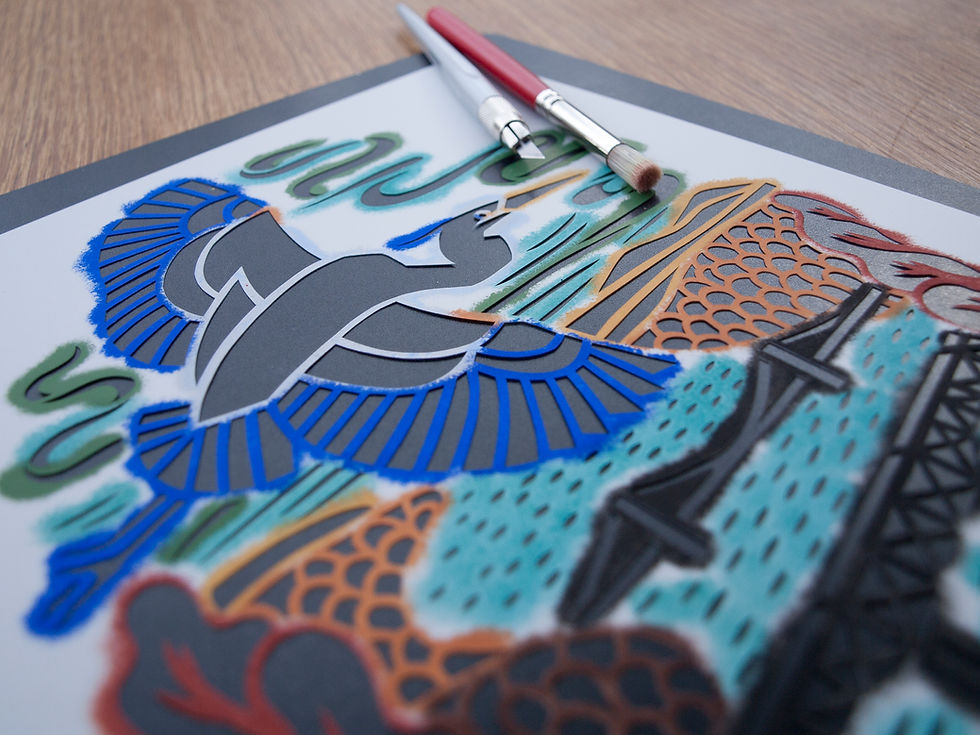
How to cut and paint with stencils, and how to find freedom within limitations. Stenciling is a technique with a lot of constraints, but those constraints can actually be inspiring and liberating.
How did you first get into your craft?
When I was a teenager, a local history museum in my grandmother's neighborhood in Tokyo held an exhibition of Katazome 型染 (traditional Japanese stencil printing) by Serizawa Keisuke 芹沢銈介, a central figure in the Mingei folk art movement of the early 20th century. I started teaching myself how to make cutout pieces afterward.
What do you love most about teaching workshops?
Learning a skill gives you joy and confidence that nothing can take away. I think it's important to have that one unshakeable source of joy, no matter what you're going through. I love being able to help make that happen for others.
What can someone expect to walk away with after your class?
A versatile technique that can be applied not only on paper, but on other materials such as fabric, interior walls, and murals. A stencil and a painting they made themselves. And a feeling of "oh, it's really not that hard to be creative."

Can you share a favorite moment from teaching or creating?
Learning from participants' work. I once taught stenciling to 3rd graders and found myself thinking, "Maybe I should be a little less precise with my cut lines to create more dynamic compositions."
How would you describe your teaching style?
I'm a product of DIY culture: anti-hierarchy, self-taught, and collaborative, so I'm there to share what I know, but equally interested in learning from participants. I try to create a flat space.
What’s a small tip or insight you wish every beginner knew?
What makes a piece of art beautiful is not your skill level, but honesty. Let your work stand on its own, without self-deprecation or grand statements, but just plainly: this is what I've got, this is who I am.
What do you love about working in the Hudson Valley / Roe Jan region?
I love finding inspiration and subjects in the Roe Jan natural landscapes. They are not only beautiful, but shelter threatened species, including the Bobolink, a grassland bird that nests in Roe Jan Park. It's quite special, and not something any of us should take for granted.
Bio
Mayuko Fujino is a self-taught paper cutout and stencil artist from Japan who is currently based in Copake, New York. Inspired by traditional Japanese stencil textile designs and the Mingei folk art movement, she has been creating art since 1999 for clients such as the National Audubon Society, the Nature Conservancy, and Williams Sonoma. Website: mayukofujino.com.
.jpeg)
Sha-na Dahl
Bees, Herbs & Listening
What will participants learn in your workshop?
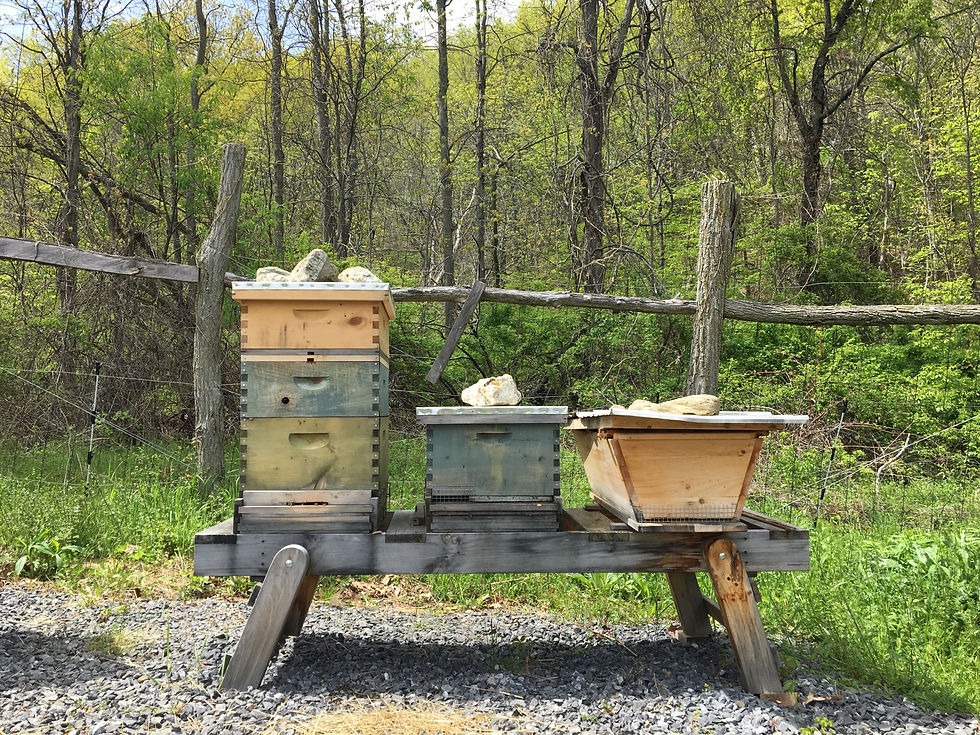
Participants will be introduced to a more holistic approach to tending bees, one that centers relationship, observation, and care. We’ll work with herbal allies that support both humans and pollinators, and explore gentle ways to move within conventional hive structures with more awareness and intention.
How did you first get into your craft?
My path to honeybees began through herbalism and body care, and a desire to work more directly with beeswax. I started tending to bees in 2011, and over time that connection expanded beyond the material into a deeper relationship with plants, pollinators, and the rhythms that hold them.
What do you love most about teaching workshops?
I love watching people slow down. There’s a moment when something shifts, when it’s no longer about information, but about connection. That moment when people begin to really notice and feel into the relationship is what I value most.
What can someone expect to walk away with after your class?
Participants will leave with a small piece of honeycomb, a printed herbal and pollinator guide, and a different way of thinking about care. I hope that they walk away seeing bees and their role in tending them, with more softness, awareness, and respect.
.jpg)
_JPG.jpg)
Can you share a favorite moment from teaching or creating?
One of my favorite moments is working with fresh plant medicine, especially when making tinctures or teas in season. There’s something about harvesting a plant at its peak, preparing it by hand, and knowing that what you’re making will support the body months later. It’s a quiet reminder that the land is always providing, if we’re paying attention.
How would you describe your teaching style?
My teaching style is slow, sensory, and grounded in experience. I’m less interested in instruction and more interested in guiding people into relationship through observation, touch, and presence.
What’s a small tip or insight you wish every beginner knew?
That you don’t need to rush to understand everything. Whether it’s bees or plants, so much comes from simply watching and listening over time. Care doesn’t always mean doing more; often, it means doing less, but with more attention.
What do you love about working in the Hudson Valley / Roe Jan region?
There’s a richness here, in the land, the seasons, and the people who are choosing to be in relationship with both. It’s a place where agriculture, ecology, and creativity overlap in a really alive way.
Bio
Sha-Na Dahl is a bee guardian, herbalist, florist, and gardener, and the founder of Little Bee Mystique. Since 2011, she has been tending honeybees and working with medicinal plants through a bee-centric, relationship-based approach.
Her work is rooted in seasonality, observation, and care weaving together beekeeping, herbalism, and floral design. Influenced by her time at the Spikenard Farm Honeybee Sanctuary, she brings an ecological and intuitive lens to tending the land and its pollinators.
Through her workshops, she invites others into a slower way of relating , one that honors both the visible and unseen connections between plants, bees, and people.

Norah Maki
Intro to Block-Printing +
Intro to Bookbinding
Norak Maki is an artist, bookbinder, and educator whose work explores the intersection of art, print, and storytelling. She holds an MFA in Design for Social Innovation from the School of Visual Arts and a BA in Visual Art from Bowdoin College. Her work has been exhibited widely in the U.S. and internationally, including solo and group shows in New York, Maine, Ireland, and Switzerland. She has studied and worked extensively in the book arts, including as a scholar in the Advanced Studies in Book Arts program at the Center for Book Arts in New York City. As an educator, she has taught workshops in bookbinding, woodcut typography, and printmaking at institutions including the Center for Book Arts and Parsons School of Design. Through her teaching, she enjoys helping people discover the tactile and creative possibilities of handmade books.
.jpg)
Diana Rupp
The Art of Pressed Flowers
Dubbed the "youthful doyenne of sewing" by the New York Times and a "craft world luminary" by Huffington Post, Diana Rupp is an accomplished educator, author and designer. A California native, Diana founded Make Workshop in 2002 and is the author of SEW: Sew Everything Workshop and Embroider Everything Workshop (Workman). She now resides in the Hudson Valley with her husband and son.
_JPG.jpg)
Luke Sarrantonio
Forest & Fungi Ecology Walk
Luke Sarrantonio grew up in Rosendale, New York and spent much of his childhood exploring the local landscape and ecological features, but it wasn’t until he attended college at SUNY ESF (College of Environmental Science and Forestry) that he truly discovered Fungi. He has had a dynamic career in Mycology, developing ecology and cultivation-based educational programs, organizing an annual mushroom and arts festival (For the Love of Fungi), community projects, and a line of functional mushroom products (under the name Mycophilic) for the past 13+ years. His major goal is to be an accessible resource for people who want to learn more about this fascinating group of life. His most recent projects include an outdoor mushroom farm and teaching space with his partner Kaya, at their farm in Accord, NY (Eat Flowers Farm), and a community project called Eat More Mushrooms. He also offers mentorships and currently serves as co-president of the Mid Hudson Mycological Association. More at Mycophilic.net
.jpg)
Emily Flake
How to Write & Draw Jokes
Emily Flake is a cartoonist, writer, and comic whose work appears regularly in the New Yorker. She is the author of several books, most recently “Joke in a Box: How to Write and Draw Jokes.” She was nominated for a WGA award for her screenwriting work on Stephen Soderbergh’s “Command-Z” and was a Yaddo fellow in 2025. She is the founder of the St. Nell’s Humor Writing Residency in Williamsport, PA.

Holly MacCammon
Navigating the American Revolution - A Guide to Researching Your Ancestors
Holly MacCammon, MSLIS, is a professional genealogist and the owner of a genealogy consulting business specializing in New York and New England research. With a Masters in Library Science and a Certificate in Genealogical Research, Holly helps clients meet their goals through project planning, in-depth analysis and comprehensive research. Holly lives in Claverack and has ancestral ties to Columbia County, the Hudson Valley and the Adirondack region dating back to the early 19th century. She also has a number of branches of Colonial-Era New England ancestors.

Ben Nickley
Observing Birds in the Wild
Ben Nickley is a scientist with a passion for birds and the ecosystems they are an integral part of. Always fascinated by nature, he got his start in science at Ohio State University where his research was recognized with an award at the Denman Undergraduate Research Forum. Since then, Ben has travelled across North America pursuing bird field studies for nonprofits, universities, and state governments—picking up his master’s in biology along the way. He is the author of several peer-reviewed articles and has presented his work at international conferences. Helping others connect with the natural world through birds is his forte and central to his mission. His role as Executive Director is to oversee the day-to-day operations of Berkshire Bird Observatory and steer its development. Ben feels privileged to have landed in the Berkshires and could not think of a better place to do the work he loves.

Robert Titus
A Geological History of the Hudson Valley: Journeys into the Past
Robert Titus, P.h.D. is a retired professor of Geology. He is best known in the Catskills as a popular science writer. Over the years he has written for several regional magazines, including Kaatskill Life and Tri-County Historical Reviews. He currently writes for a local newspaper: the Mountain Eagle. He and his wife Johanna are the authors of five books on Catskills and Hudson Valley geology. The Titus’s have a facebook page (“The Catskill Geologist”), a blog site (“thecatskillgeologist.com”) and they can be contacted at
_JPG.jpg)
Jennifer Elliott
Queen of Flowers: Arranging Peonies
Jenny Elliott is the owner of Tiny Hearts Farm and Flower Shop, a 40 acre cut flower farm where flowers are grown and harvested for seasonal arrangements and event work.

Margot Becker
Fleece to Yarn: Introduction to Fiber Milling
Margot Becker is a Hudson-based artist, weaver, and educator. Her work explores sense of place, the natural environment and the connection between the individual and the communal subconscious. Through tactile processes, she questions our understanding of sustainability, the value of labor and the role of handcraft in late capitalism. Her weaving practice originated from a deep desire to understand the origins and lives affected by the production of the cloths that surround us in our day to day. In 2010, Margot embarked on an independent study to understand the process of creating textiles from start to finish. Following the belief that to know your production line, you must be your production line, this project became an all-encompassing life practice- incorporating animal husbandry, yarn spinning technologies and fine hand weaving. The resulting line of vertically integrated textiles, Margot Handwoven, is now shown nationwide and in Japan. Margot Becker received a BA from Bard College in 2009 and an MFA with California College of Art in 2020.

Dan Pelosi
Making Meatballs with our Favorite Meatball
Dan Pelosi is the Italian meatball making meatballs behind GrossyPelosi, the popular Instagram favorite for all things comfort and food. Approachable and tasty, Dan’s recipes are meant to be shared and celebrated with the ones you love. Dan’s first cookbook, LET’S EAT, was an instant New York Times bestseller, as was his second cookbook LET’S PARTY. Dan is a contributor to New York Times Cooking and appears regularly on Good Morning America. He splits his time between Brooklyn and upstate New York, but you can always find him online at @grossypelosi.

Lizz Hill Wiker
Learn to Knit
Lizz Hill Wiker is a fiber artist, 3D modeler and knitter living full-time in Hudson, New York. Her work often combines traditional handcraft techniques with modern technologies like 3D printing. In addition to teaching beginner and intermediate knitting classes at local craft stores and specialty shops in the Hudson Valley, Lizz hosts community knitting groups in partnership with Barnfox (held at Hudson and Kingston locations). To see Lizz's current work and learn about upcoming workshops and meet ups, connect with Lizz on Instagram, @lizz_hill_wiker.
.png)
Marc Acito
Books & Cake Presents From Page to Stage: Turning Books Into Musicals
Marc Acito has traversed a multi-hyphenate career as a novelist (Ken Kesey Award for the New York Times Editor’s Choice How I Paid for College); journalist (regular commentator to six million listeners on NPR’s All Things Considered) playwright (Helen Hayes Award for his comedy Birds of a Feather); stage director (New York Times Critic’s Pick for his Off-Bway musical Bastard Jones) and filmmaker (multiple award-winning film musical MAD/WOMAN). Acito also wrote the libretto of the Broadway musical Allegiance, which was subsequently produced in Tokyo and London’s West End. In 2016, he became the first Broadway librettist to have a new Mandarin-language musical produced in China (The Secret, featuring the music of the “King of Mando Pop” Jay Chou), followed by Sound of the Silk Road in 2021). Other musicals include A Room with a View (Old Globe, 5th Avenue Theatre) and Chasing Rainbows (Goodspeed Musicals, Papermill Playhouse). His most gratifying work, however, is mentoring young artists through the Theatre Development Fund and teaching History and Musicals at New York University. @AcitoMarc / MarcAcito.NYC.
Kevin West
Garden Fresh Herbs, A Cooking Class
Kevin West is a cookbook author, travel writer, and photographer living in the Berkshires. His latest cookbook, The Cook’s Garden, is a guide to growing organic vegetables and cooking with seasonal produce. His first cookbook, Saving the Season, was dedicated to making fine jam, pickles, ferments, and other preserves. When not in the garden or kitchen, Kevin is editor at large for Travel + Leisure.

Molly Levine
Late Spring Vegetable Pasta Making, a Cooking Class
Molly Levine is a chef, restaurant consultant, event curator, and local food advocate. Her formative years working at Alice Water’s seminal farm-to table restaurant Chez Panisse, in Berkeley, CA defined her unwavering principles in seasonality, locality, and sustainability and formed the backbone of her culinary style. She is the owner of Westerly Canteen, a “sort of restaurant” house in a 1971 airstream in the Hudson Valley.

Joan Osfsky
&
Mary Randolph Carpenter
Telling Stories About the Things You Love
Through the work of founding Hammertown, the beloved lifestyle stores located in Pine Plains and Rhinebeck, Joan Osofsky has been helping people deepen their connection to their homes and community for over 40 years. Joan has spent a career hand picking exquisite antiques, house wares, clothing, and decor, and with this work, she has collected many, many stories.
Mary Randolph Carter, writer and longtime creative director for Ralph Lauren, has always celebrated beautiful objects and the stories they hold. In a recent interview with THE LAKEVILLE JOURNAL, she said of the ten books she has authored, “At the root of each is my love of collecting, the thrill of the hunt, and living surrounded by things that conjure up family, friends, and memories.”

Margaret Roach
Open Garden and Broken Arrow Plant Sale
Margaret Roach has been a leading garden writer for 30 years, at “Martha Stewart Living,” “Newsday,” and since April 2020 for “The New York Times,” where she began her journalism career. She is the author of “A Way to Garden” and two other books. Margaret hosts a public-radio podcast, lectures, and holds tours at her 2.3-acre Copake Falls garden, which she likes to think of as a giant birdfeeder, welcoming a diversity of insect, bird and other animal life.

Peter Bevacqua & Stephen King
Open Garden
Peter Bevacqua and Stephen King are partners who have cultivated a renowned 2.5-acre private garden in Claverack, NY, for over 38 years. Their property, featured in Garden Conservancy Open Days, blends formal topiary hedging with wildish, native plantings, a "sunk garden," and an antique glass house.